
BABY & TODDLER SLEEP SUPPORT
Baby Sleep Consultant Perth
Understand your baby. Work with their biology. Take the pressure off sleep.
If you’re exhausted, confused by conflicting sleep advice or wondering why your baby doesn’t sleep the way you were told they should, I can help.
My approach isn’t about teaching your baby to sleep independently, following wake windows or leaving them to cry. Instead, we look at the biology that drives sleep, your baby’s individual sleep needs and what is happening across your whole day and night.
Responsive, evidence-informed sleep support for babies and toddlers in Perth and online.
What if your baby isn’t the problem?
You’ve been told your baby should be sleeping longer stretches. That they need a routine. That you shouldn’t feed them to sleep. That contact naps create bad habits. That they should be able to “self-settle”.
And when your baby doesn’t follow the rules, it can feel as though something has gone wrong.
But babies haven’t read the sleep books.
Frequent waking, feeding to sleep, contact naps, needing help to settle and wanting to be close to you can all be part of biologically normal infant sleep.
Sometimes the first step towards making sleep feel easier isn’t changing your baby.
It’s understanding your baby.
A Different Way of Looking at Baby Sleep

Sleep is biological, not a skill
Babies don’t need to be taught how to sleep. Sleep is regulated by biology, particularly the interaction between circadian rhythms and sleep pressure.
Understanding these biological drivers allows us to work with your baby’s sleep rather than spending your days trying to control it.

Normal sleep varies enormously
There is no single amount of sleep, nap length or night-waking pattern that is right for every baby.
Understanding your baby’s individual sleep needs can take away much of the anxiety created by schedules, wake windows and expectations about what your baby “should” be doing.

Connection isn't a bad habit
Feeding, cuddling and responding to your baby are powerful biological tools for helping them regulate and settle.
You will never hear me tell you that responding to your baby is creating a problem that needs to be fixed.
Less worry. Less battling sleep.
More understanding. More confidence.
You don’t need to teach your baby how to sleep.

Baby Sleep Isn’t a Linear Progression
Baby sleep changes throughout infancy and toddlerhood, and development rarely follows a neat upward line.
A baby who has been sleeping longer stretches may suddenly start waking more frequently. Learning to roll, crawl or walk, separation awareness, illness, teething, travel and changes in feeding can all temporarily affect sleep.
That doesn’t necessarily mean something has gone wrong or that you’ve created a “bad habit”.
Sleep consolidation can be a bit of a roller coaster.
Understanding that can take enormous pressure off parents who feel they need to intervene every time their baby’s sleep changes.
And Yes, You Can Feed Your Baby to Sleep
Feeding to sleep is one of the most powerful biological settling tools babies have.
If breastfeeding or feeding your baby to sleep is working for you, there is no reason to stop simply because someone has warned you that you’re creating a “sleep association”.
Babies are designed to fall asleep in connection with another human being.
If feeding to sleep is no longer working for you, we can explore other responsive ways of helping your baby settle.
But we don’t need to remove something that is working simply because the internet says you should.

Sleep Doesn’t Happen in Isolation
After nearly 30 years working with babies and families, I rarely see sleep as a stand-alone issue.
Sleep interacts with what is happening throughout your baby’s entire day and with what is happening for your family.
During a consultation, we might explore:

Feeding
Breastfeeding, bottle feeding, night feeding, feeding to sleep and whether feeding concerns are contributing to unsettled behaviour.

Development
Sensory needs, gross motor development, separation awareness and the enormous neurological changes happening throughout infancy can all influence sleep.

Biology
Breastfeeding, bottle feeding, night feeding, feeding to sleep and whether feeding concerns are contributing to unsettled behaviour.

Your Family
How everyone is coping, what feels difficult, what support you have and what changes would actually make life more manageable for your family.
Your Needs Matter Too
Meeting your baby’s neede doesn’t mean your own needs stop mattering.
If sleep has become exhausting or stressful, we can look at ways to make life more manageable while continuing to respond to your baby.
Sometimes that means changing expectations.
Sometimes it means looking differently at naps, bedtime or the structure of the day.
Sometimes it means finding more sustainable ways to manage night-time parenting.
And sometimes simply understanding that your baby’s behaviour is normal removes an enormous amount of worry.
Instead of only asking:
“How do we make our baby sleep more?”
ask:
“What is making sleep so difficult for our family, and what can we change?”
Baby & Toddler Sleep Consultations
There is no standard sleep plan because there is no standard baby.
During a consultation, we explore what is happening with your baby’s sleep, what is feeling difficult for your family and what you would like to change.
We look at your baby’s individual sleep needs, sleep pressure, circadian rhythm, feeding, development and what is happening across their whole 24 hours.
Together, we identify practical changes that fit your baby, your values and your family.
Your consultation may include:
- Understanding your baby’s individual sleep needs
- Naps, bedtime and the length of your baby’s night
- Frequent waking, false starts and early waking
- Feeding to sleep and contact naps
- Developmental changes and an increased need for closeness
- Sleep pressure, circadian rhythm and the whole 24 hours
- Bedsharing and safer sleep
- Moving away from rigid routines and wake windows
- Supporting your own sleep and wellbeing
HOW WE CAN MEET
Choose the support that works for your family
Every family’s circumstances are different, so consultations are available in clinic, in your own home or online via Zoom. Whichever option you choose, we will take the time to understand your baby, your family and what is happening across the whole 24 hours.
Online via Zoom
Zoom Sleep Consultation
$250
Meet with me online without having to pack the baby bag or plan around travel.
You’re welcome to feed, cuddle or care for your baby as we talk—there’s no need for them to be asleep or settled for our appointment.
Includes:
A detailed exploration of your baby’s sleep, feeding and daily rhythms.
Recommendations tailored to your baby and your family.
A 15-minute follow-up phone call within two weeks.
Two weeks of email or text support.
In clinic
Clinic Sleep Consultation
$299
Meet with me at The Village Wellness Centre in West Perth for a relaxed, face-to-face consultation.
You’re welcome to bring your baby or toddler along, or attend without them. It’s completely up to you.
Includes:
A detailed exploration of your baby’s sleep across the whole 24 hours
Individualised, biologically realistic recommendations
A 15-minute follow-up phone call within two weeks
Two weeks of email or text support
In your home
Home Sleep Consultation
*$299
With strong demand for appointments, I’m keeping home visits local so I can spend more time supporting families and less time travelling.
Home visits are available within 10 minutes’ drive of Mount Hawthorn, allowing for traffic at your appointment time.
Home visits are arranged directly with me. Please get in touch with your suburb and preferred days, and I’ll let you know what I can offer.
If you live further afield, I’d love to support you at my West Perth clinic or via Zoom.
No sleep training. No rigid schedules. No one-size-fits-all plans.

Why Work With Me?
I’m Pip Wynn Owen, a Registered Midwife, International Board Certified Lactation Consultant, NDC (Possums) Accredited Health Professional and Certified Childbirth & Early Parenting Educator.
I’ve spent nearly 30 years working with babies and families. That experience has taught me that sleep rarely exists in isolation. Feeding, development, sensory needs, temperament, parental wellbeing and the realities of family life can all influence what is happening.
My broad background means we can look beyond the number of times your baby wakes and consider the whole picture. You won’t be given a generic sleep schedule or asked to ignore your baby’s communication.
I’m here to help you understand your baby, feel more confident in responding to them and find an approach that works for your family.
Registered Midwife
Nearly 30 years working with mothers, babies and families
IBCLC
International Board Certified Lactation Consultant
NDC Accredited
Neuroprotective Developmental Care
(aka Possums)
Early Parenting Educator
More than 20 years supporting expectant and new parents
Parental Brain Educator
Understanding how becoming a parent changes the brain and supports responsive care
I was seeking a gentle, biological supportive approach to sleep and nursing my baby. As a new mum with a strong desire for a holistic approach but with little knowledge & support around me, I felt alone and doubted myself. However when meeting Pip she helped me find my confidence through her encouragement, evidence based resources and further more, a community of like minded parents. We quickly established healthy safe cosleeping and nursing techniques that also helped me gain a strong bond with my baby, which was especially important to me after experiencing separation after birth. Although the parenting journey is still a roller coaster (and in its own rights, I think it’s meant to be) at the back of my mind knowing I made the best decisions to support my babies neurodevelopment gave me the comfort and confidence I needed in striving forward as a the mother that I am.
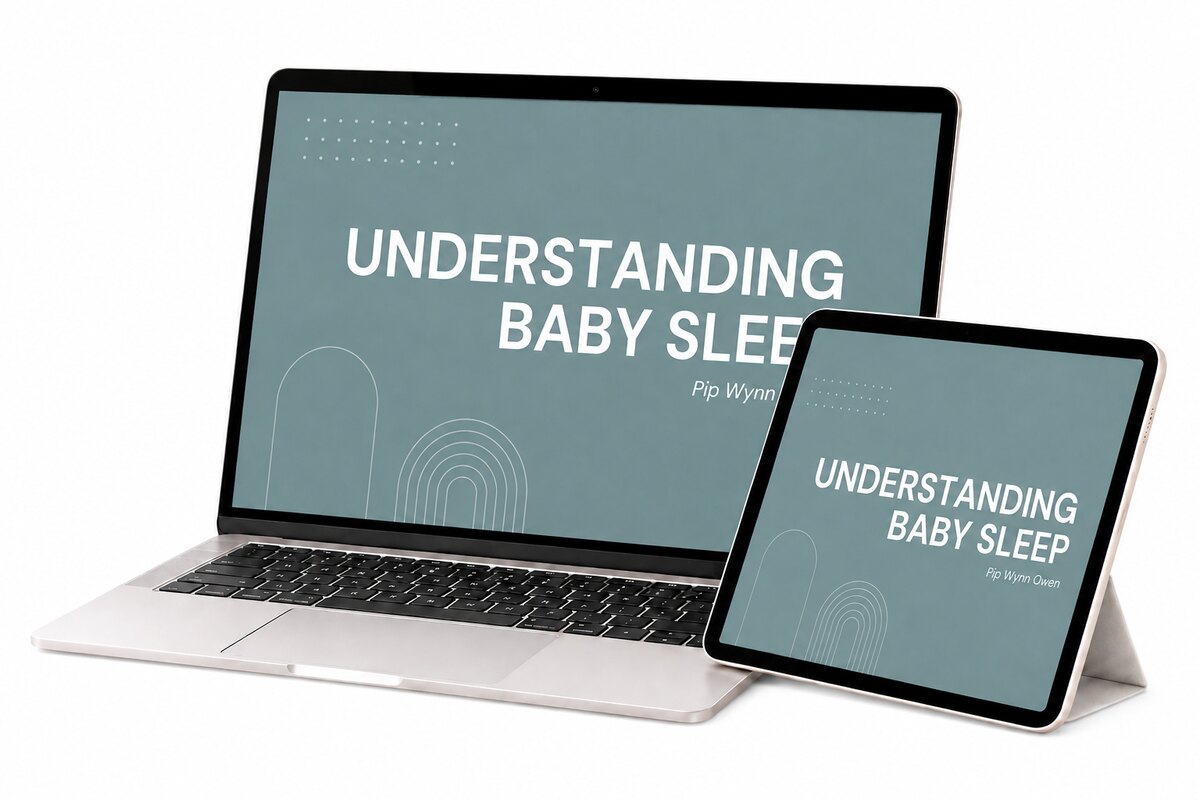
Prefer to Start by Learning More?
Understanding Baby Sleep Online Workshop
An 80-minute, four-part online workshop
If you want to understand your baby’s sleep before booking an individual consultation, this self-paced workshop is a good place to begin.
It explores biologically normal baby sleep, common sleep myths, sleep pressure and circadian rhythms, and how you can work with your baby’s biology while continuing to respond to their cues.
You’ll learn about:
- why your parenting values matter
- what biologically normal baby sleep looks like
- common myths about “bad habits” and self-settling
- sleep pressure and circadian rhythms
- working with your baby’s biology to make days and nights more manageable
This isn’t a sleep programme or another set of rules to follow. It is evidence-informed information designed to help you understand your baby and feel more confident trusting your instincts.
Frequently Asked Questions
A few of the questions parents commonly ask before booking a sleep consultation.
Is this sleep training?
No. I don’t use controlled crying, check-and-console, graduated extinction or leaving babies to cry.
My approach is biological, responsive and attachment-centred. We look at sleep pressure, circadian rhythm, feeding, development, sensory needs, temperament and what is happening across your family’s whole day.
The aim is to understand your baby and identify realistic changes—not to teach them to stop communicating or needing you.
Will I be asked to stop feeding, cuddling or responding to my baby overnight?
No. Feeding, cuddling, rocking, and contact are normal ways babies settle, regulate and fall asleep.
I won’t ask you to stop feeding your baby to sleep simply because it has been labelled a “bad habit”. If something is no longer sustainable for your family, we can explore responsive alternatives without withdrawing comfort or connection.
What ages do you support?
I support families with newborns, babies and toddlers.
Sleep changes enormously throughout early childhood, so any guidance needs to reflect your baby’s developmental stage, temperament, feeding and individual sleep needs. There is no one-size-fits-all approach.
What happens during a sleep consultation—and what follow-up is included?
During your consultation, we explore your baby’s sleep across the whole 24 hours, including sleep pressure, circadian rhythm, naps, bedtime, night waking, feeding, development and what is feeling difficult for your family.
Together, we identify practical, realistic changes that fit your baby, your parenting values, and your family circumstances.
Your consultation also includes a 15-minute phone follow-up within two weeks, plus two weeks of email or text support.
Will a consultation make my baby sleep through the night?
No one can guarantee that a baby will sleep for a particular number of hours or stop waking. Baby and toddler sleep naturally changes with development, feeding, illness, separation awareness and many other factors.
In Western, educated, industrialised, rich and democratic—or WEIRD—cultures, parents are often led to expect babies to sleep alone, settle independently and sleep for long, uninterrupted stretches from an early age. These are cultural expectations, not universal biological norms.
A consultation is not about forcing your baby to sleep through. It is about replacing unrealistic cultural expectations with a more biologically realistic understanding of your baby, reducing unnecessary worry and identifying changes that may make sleep and night-time parenting feel more manageable.
Do you offer home visits and Zoom consultations?
Yes. I offer sleep consultations in your home or online via Zoom, so you can choose the option that feels easiest for your family.
A Zoom consultation still gives us time to explore your baby’s sleep, feeding, development and what is happening across the whole 24 hours. Home visits are available across Perth, although an additional travel fee may apply depending on your location.
Are there additional travel fees for home visits?
Yes. I offer sleep consultations in your home or online via Zoom, so you can choose the option that feels easiest for your family.
The home consultation fee includes travel within 20 km. Travel surcharges apply for appointments further away:
- 20–30 km: $20
- 30–40 km: $40
- More than 40 km: By quotation
Please contact me before booking if you are unsure whether an additional travel fee applies.
You Don’t Need Another Set of Sleep Rules
If you’re exhausted, confused or simply want reassurance that what your baby is doing is normal, let’s look at what is happening together.
Understand your baby. Trust your instincts. Find what works for your family.